
Laravel 11 Performance Deep Dive: Queues, Jobs, and Horizon for High-Traffic APIs
Modern APIs are no longer simple data providers. They orchestrate business workflows, trigger AI pipelines, integrate with multiple third-party platforms, and serve users across geographies in real time. In this environment, performance is not an optimization—it is a requirement. At Brigita, where we engineer Generative AI platforms, Cloud solutions, and enterprise systems, we treat backend […]
Scaling the Future: Event-Driven Architectures in Node.js for High-Concurrency Backends

In today’s hyperconnected world, scalability is more than adding servers — it’s about designing systems that respond intelligently, recover gracefully, and perform seamlessly under unpredictable loads. Enterprises embracing AI-driven, cloud-native, and real-time applications need backends that can process thousands of concurrent events without breaking a sweat. At Brigita, we specialize in engineering high-performance AI and […]
Practical LLM Orchestration: Real-World Patterns for Self-Healing Enterprise Workflows

As Large Language Models (LLMs) move from research to real-world enterprise environments, their role is expanding beyond chatbots and Q&A tools. Forward-thinking organizations are embedding LLMs into complex workflows — not just to generate responses but to reason, adapt, and recover when processes fail. This is where LLM orchestration comes in — a systematic way […]
Architecting for Global Scale: Multi-Tenant Best Practices
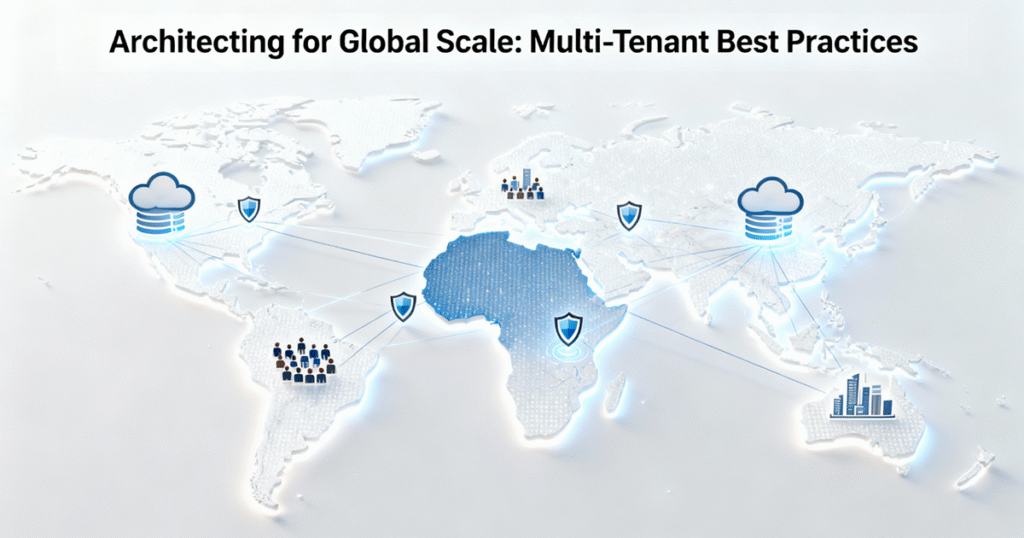
In our increasingly digital world, enterprises want services that not only work well locally but scale reliably across regions, customers, and usage patterns. For SaaS, GenAI platforms, or any cloud-native system aiming for global reach, multi-tenant architecture is essential. It enables efficient resource usage, operational simplicity, and consistent experiences across customers (tenants) without duplicating infrastructure. […]