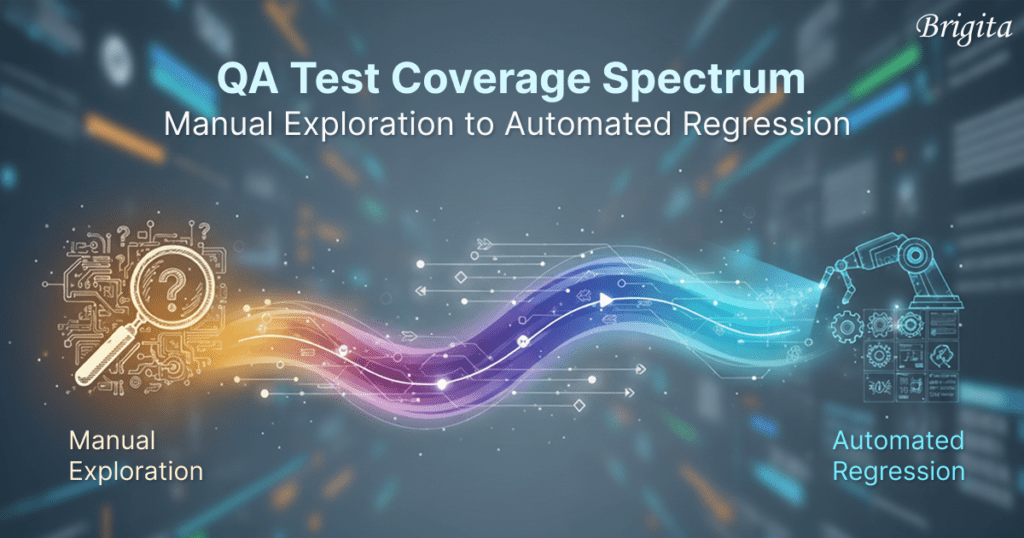
In today’s fast-paced software development landscape, ensuring quality is a critical step in delivering functional and stable applications. A key component of this is QA Test Coverage, which encompasses the scope of tests performed on a software product to ensure it meets expected behavior and functionality. But as technology advances, so do the testing strategies. From Manual Testing to automated regression testing, the testing spectrum is evolving. Let’s dive into the role of manual exploration and how it complements automated regression in the modern testing pipeline.
Understanding QA Test Coverage
At its core, QA test coverage refers to the percentage of an application’s code or features that are tested to ensure they function as expected. However, it’s important to understand that high test coverage doesn’t always translate into high quality. It’s not just about testing every line of code—it’s about testing the right things. Exploratory tests, edge cases, and performance tests are just as important as functional checks.
The Importance of Manual Testing
Despite the rise of automation, manual testing remains indispensable in software quality assurance. While automated tests excel in repetitive tasks like regression testing, manual testing is crucial for areas that require human intuition, such as UX/UI testing, or more unpredictable scenarios. Exploratory testing—a form of manual testing—allows testers to use their creativity and instincts to uncover bugs automation might miss.
Automated Regression Testing: A Critical Piece of CI/CD
Automated regression tests are essential in ensuring that new features don’t break existing functionality. These tests are executed automatically whenever new code is deployed, making them a natural fit for CI/CD pipelines. With a robust suite of automated regression tests in place, teams can release faster with confidence, knowing that any regression issues will be caught immediately.
The Hybrid Approach: Combining Manual and Automated Testing
In many organizations, a hybrid approach is becoming the norm. Manual testing and automated regression testing each serve unique purposes, and when combined, they offer the best of both worlds. Manual testing allows for creative exploration and nuanced feedback, while automated testing can handle repetitive checks with speed and accuracy. The key is finding the right balance between these two approaches based on the project’s needs.
Risk-Based Testing: Focusing on What Matters
Not all tests are created equal. Risk-based testing is a strategy that prioritizes tests for the most critical and high-impact features. By focusing efforts on parts of the application that are most likely to fail or have the most significant consequences, teams can ensure that they are optimizing resources while still covering the areas that matter most.
Agile Development and the Rise of Test Automation
In Agile environments, speed is crucial. Automated regression testing allows Agile teams to keep up with the fast-paced development cycles without sacrificing quality. Test automation ensures that features are continuously tested as they are built, making it easier for teams to deliver bug-free software in short timeframes.
Overcoming Challenges in Test Coverage
One challenge that often arises is the assumption that more test coverage equals better software quality. In reality, this isn’t always the case. Focusing solely on test coverage can lead to diminishing returns, where additional testing doesn’t yield more valuable insights. Manual testing often uncovers issues that automated tests might overlook, making it a valuable complement to automated regression testing.
The Future of Test Coverage: AI and Beyond
Looking ahead, the future of QA Test Coverage may lie in integrating AI and machine learning into testing strategies. Predictive models could help identify potential problem areas before they become issues, further enhancing the quality of testing.
Frequently Asked Questions
1. What is QA test coverage, and why is it important?
QA test coverage measures how much of an application’s functionality is tested to ensure expected behavior. At Brigita, we focus not just on increasing coverage numbers, but on meaningful coverage—testing critical workflows, edge cases, and real-world scenarios that directly impact software quality and business outcomes.
2. How does manual testing complement automated regression testing?
Manual testing brings human intuition, creativity, and UX-focused validation that automation cannot fully replicate. Brigita combines exploratory manual testing with automated regression testing to ensure both functional stability and superior user experience across every release.
3. When should organizations invest in automated regression testing?
Automated regression testing becomes essential when applications scale, release cycles shorten, or CI/CD pipelines are adopted. Brigita helps organizations identify the right time and scope for automation, ensuring faster releases without compromising quality.
4. Why is a hybrid QA testing approach recommended?
A hybrid approach leverages the strengths of both manual and automated testing. Brigita designs custom QA strategies where automation handles repetitive validations while manual testing focuses on complex workflows, usability, and risk-prone areas—delivering balanced and reliable test coverage.
5. How does Brigita improve QA test coverage for modern applications?
Brigita improves QA test coverage by using risk-based testing, automation frameworks, and continuous testing practices aligned with Agile and CI/CD environments. Our QA experts ensure that every release is thoroughly tested for performance, security, and functionality—without slowing down development.