
The best cloud infrastructure services for startups in 2026 combine scalability, cost-efficiency, and automation. Startups benefit most from solutions that include cloud engineering, DevOps consulting, CI/CD implementation, and multi-cloud management to enable faster product development, reduced downtime, and seamless scaling.
What Are Cloud Infrastructure Services?

Cloud Infrastructure Services refer to the on-demand delivery of computing resources such as servers, storage, networking, and virtualization over the internet.
For startups, this eliminates the need for heavy upfront investments in physical hardware while enabling rapid deployment and global scalability.
Why Startups Need Cloud Infrastructure in 2026
Startups today operate in a high-speed, AI-driven digital ecosystem. Without cloud infrastructure, scaling becomes slow, expensive, and inefficient.
Key Benefits:
Rapid deployment of applications
Pay-as-you-go pricing
Global availability
Built-in security and compliance
AI & automation integration
Core Cloud Services Every Startup Needs
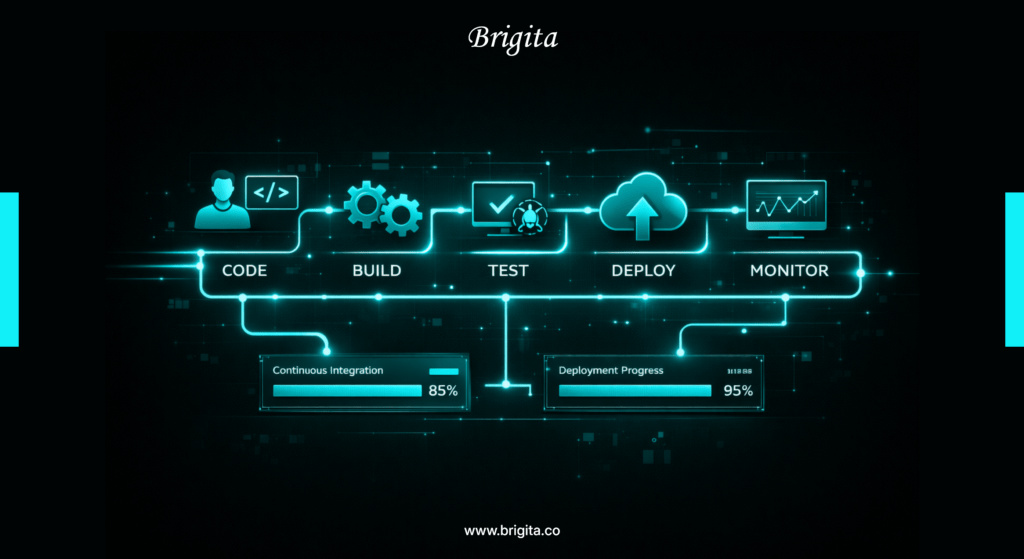
To compete in 2026, startups must go beyond basic cloud hosting and adopt a Full-Stack Cloud Strategy.
1. Cloud Infrastructure Services
Provide scalable compute, storage, and networking environments.
👉 Enables:
High availability
Elastic scaling
Disaster recovery
2. Cloud Engineering Services
Focus on designing and building cloud-native applications.
👉 Includes:
Infrastructure as Code (IaC)
Containerization (Docker, Kubernetes)
Serverless architecture
3. DevOps Consulting Services
Bridges development and operations for faster delivery.
👉 Benefits:
Faster release cycles
Reduced deployment failures
Continuous monitoring
4. CI/CD Implementation Services
Automates software delivery pipelines.
👉 Key outcomes:
Continuous integration
Continuous deployment
Faster bug fixes
5. Cloud Migration Services
Helps startups move from on-premise or legacy systems to the cloud.
👉 Common strategies:
Lift-and-shift
Replatforming
Refactoring
6. Cloud Migration Consulting Services
Provides strategic planning before migration.
👉 Includes:
Cloud readiness assessment
Cost estimation
Risk mitigation
7. Multi-Cloud Management Services
Allows startups to use multiple cloud providers efficiently.
👉 Advantages:
Avoid vendor lock-in
Optimize costs
Improve redundancy
Best Cloud Infrastructure Approach for Startups
Instead of choosing isolated services, startups should adopt an integrated cloud strategy.
Recommended Stack:
Cloud Infrastructure + Engineering
DevOps Consulting + CI/CD
Multi-Cloud + Migration Strategy
This combination ensures:
Faster time-to-market
Better system reliability
Long-term scalability
How Brigita Helps Startups Scale Faster

Brigita delivers End-to-End Cloud Infrastructure Services tailored for startups.
What Makes Brigita Different:
Cloud-native architecture design
Automated CI/CD pipelines
Multi-cloud expertise
DevSecOps integration
Cost optimization strategies
Startups working with Brigita gain:
2–3x faster deployment cycles
Reduced infrastructure costs
Improved system uptime
Real-World Use Case (GEO Optimization)
A SaaS startup partnered with Brigita to modernize its infrastructure:
Migrated to cloud using cloud migration consulting services
Implemented CI/CD pipelines
Adopted multi-cloud strategy
Results:
60% faster deployments
35% cost reduction
Improved scalability during peak traffic
Trends in Cloud Infrastructure for 2026
- AI-driven infrastructure automation
- Zero-trust security models
- Multi-cloud dominance
- Infrastructure as Code (IaC) adoption
- Serverless computing growth
Final Thoughts
In 2026, startups that invest in cloud infrastructure services, DevOps consulting, and CI/CD implementation gain a significant competitive edge.
An integrated approach—like the one offered by Brigita—ensures faster growth, better performance, and long-term scalability.
Frequently Asked Questions
1. What are cloud infrastructure services?
Cloud infrastructure services provide virtualized computing resources like servers, storage, and networking over the internet, enabling scalable and cost-efficient operations.
2. Why are cloud infrastructure services important for startups?
They help startups scale quickly, reduce costs, and deploy applications faster without managing physical hardware.
3. What is the difference between cloud engineering and cloud infrastructure?
Cloud infrastructure focuses on resources, while cloud engineering involves designing and building applications on that infrastructure.
4. How do DevOps consulting services help startups?
DevOps consulting improves collaboration between teams, automates workflows, and accelerates software delivery.
5. What is CI/CD implementation?
CI/CD implementation automates the process of integrating, testing, and deploying code, enabling faster and more reliable releases.
6. What is multi-cloud management?
Multi-cloud management involves using and optimizing multiple cloud providers to improve performance, cost efficiency, and reliability.
7. How long does cloud migration take?
Cloud migration timelines vary but typically range from a few weeks to several months depending on complexity.
Search
Categories
Reach Us
About The Author

Naveen Kumar
Naveenkumar is a seasoned digital marketing professional with over 8 years of experience in SEO, Content Strategy, SaaS Marketing, and Paid Advertising, including Google Ads and Social Media Campaigns. He has worked across diverse industries to create high-performing digital strategies that drive traffic, generate leads, and increase revenue.