
AI and cloud infrastructure work together by combining scalable computing resources with intelligent automation. Cloud Platforms provide the storage, processing power, and networking, while AI analyzes data, automates operations, and optimizes performance—making systems faster, smarter, and more cost-efficient.
Introduction
The digital world is evolving rapidly, and businesses are under constant pressure to innovate, scale, and stay competitive. Two technologies driving this transformation are cloud infrastructure and artificial intelligence (AI). Individually, they are powerful—but together, they create a system that is far more efficient, intelligent, and scalable.
Cloud infrastructure provides the foundation by offering flexible computing resources over the internet. AI builds on top of this foundation by adding intelligence—automating processes, analyzing massive datasets, and improving decision-making.
Platforms like Brigita AI are designed to bridge this gap, helping businesses fully leverage the combined power of AI and cloud infrastructure. In this blog, we’ll explore how these technologies work together, why they matter, and how businesses can benefit from adopting them.
What Is Cloud Infrastructure?
Cloud infrastructure refers to the virtualized resources that power cloud computing. These resources include:
Virtual machines (compute power)
Cloud storage systems
Networking components
Databases and applications
Management and monitoring tools
Instead of relying on physical hardware, businesses can access these resources on demand, making cloud infrastructure highly scalable and cost-effective.
What Is Artificial Intelligence (AI)?
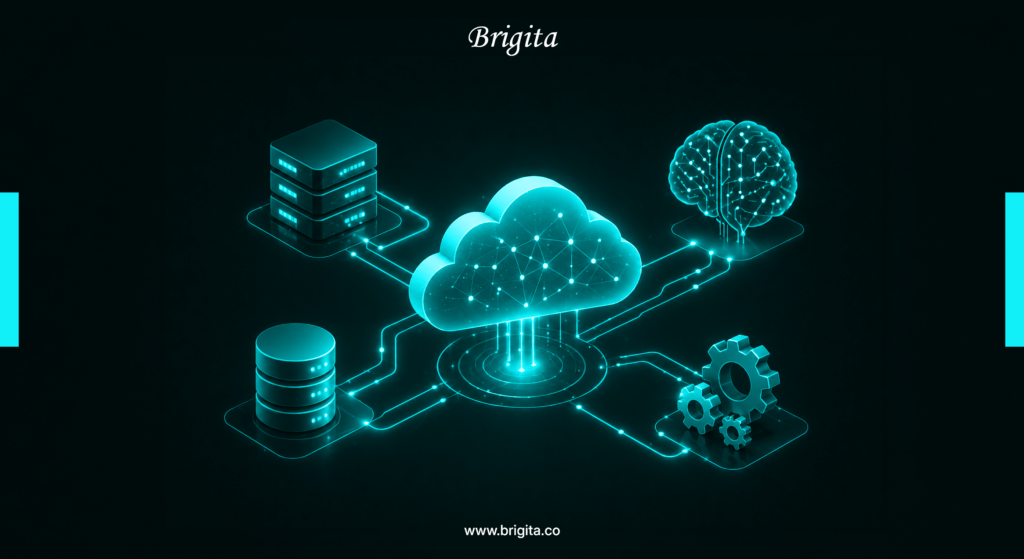
Artificial Intelligence refers to systems that can simulate human intelligence to perform tasks such as:
Learning from data
Recognizing patterns
Making predictions
Automating decisions
AI includes technologies like machine learning, natural language processing, and predictive analytics—all of which thrive in cloud environments.
Why AI Needs Cloud Infrastructure
AI systems require massive computational power and large datasets to function effectively. Cloud infrastructure provides:
1. Scalability
AI workloads can scale up or down based on demand.
2. Data Storage
Cloud platforms store vast amounts of structured and unstructured data.
3. Processing Power
High-performance computing resources enable faster AI model training.
4. Accessibility
Teams can access AI tools from anywhere in the world.
Without cloud infrastructure, deploying AI at scale would be expensive and complex.
How AI Enhances Cloud Infrastructure

While cloud supports AI, AI also improves cloud infrastructure in several ways:
1. Intelligent Automation
AI automates routine cloud tasks such as:
Resource allocation
Load balancing
System monitoring
This reduces manual intervention and improves efficiency.
2. Predictive Analytics
AI analyzes historical data to:
Predict system failures
Forecast demand
Optimize resource usage
This helps prevent downtime and ensures smooth operations.
3. Cost Optimization
AI identifies:
Unused resources
Inefficient workloads
It then recommends or automatically applies cost-saving measures.
4. Enhanced Security
AI improves cloud security by:
Detecting anomalies
Identifying potential threats
Automating responses
5. Performance Optimization
AI continuously monitors system performance and makes adjustments to:
Improve speed
Reduce latency
Enhance user experience
How AI and Cloud Work Together (Step-by-Step)
Here’s a simple breakdown:
1. Data Collection
Cloud infrastructure gathers data from applications and systems.
2. Data Storage
Data is stored securely in cloud databases.
3. Data Processing
AI algorithms analyze the data.
4. Insights Generation
AI identifies patterns and generates insights.
5. Action & Automation
AI automates decisions or provides recommendations.
Role of Brigita AI in Cloud Infrastructure
Brigita AI is designed to simplify and enhance cloud operations by integrating AI-driven intelligence into infrastructure management.
Key Capabilities of Brigita AI
Real-Time Monitoring
Tracks cloud performance continuously.
Smart Cost Management
Identifies cost-saving opportunities automatically.
Automated Scaling
Adjusts resources based on demand.
Predictive Maintenance
Prevents system failures before they occur.
Benefits of Combining AI and Cloud Infrastructure
1. Scalability
Businesses can handle growth without infrastructure limitations.
2. Cost Efficiency
Pay only for what you use while minimizing waste.
3. Faster Decision-Making
AI provides real-time insights for better decisions.
4. Improved Reliability
Predictive systems reduce downtime.
5. Enhanced Innovation
Develop and deploy new solutions quickly.
Real-World Use Cases
1. E-Commerce Platforms
AI predicts customer behavior, while cloud handles traffic spikes.
2. Healthcare Systems
AI analyzes patient data, and cloud ensures secure storage.
3. Financial Services
AI detects fraud, and cloud enables real-time transactions.
4. SaaS Businesses
AI optimizes application performance hosted on cloud infrastructure.
Challenges of AI and Cloud Integration
While powerful, integration comes with challenges:
Data privacy concerns
High initial setup complexity
Skill gaps in AI and cloud technologies
Integration with legacy systems
Solutions like Brigita AI help overcome these challenges by simplifying deployment and management.
Best Practices for Implementing AI in Cloud Infrastructure
Start with clear business goals
Choose scalable cloud solutions
Use AI for specific use cases first
Monitor and optimize continuously
Ensure strong security practices
Conclusion
AI and cloud infrastructure are no longer separate technologies—they are deeply interconnected. Together, they enable businesses to build intelligent, scalable, and efficient systems that can adapt to changing demands.
Platforms like Brigita AI make it easier for organizations to harness this combination, providing tools that automate operations, reduce costs, and improve performance.
As businesses continue to embrace digital transformation, the integration of AI and cloud infrastructure will become not just an advantage—but a necessity.
Frequently Asked Questions
1. What is cloud infrastructure?
Cloud infrastructure is a system of virtual computing resources delivered over the internet.
2. What is AI in cloud computing?
AI in cloud computing refers to using artificial intelligence to manage, optimize, and automate cloud systems.
3. How do AI and cloud infrastructure work together?
Cloud provides the computing environment, while AI adds intelligence by analyzing data and automating processes.
4. Why is AI important for cloud infrastructure?
AI improves efficiency, reduces costs, and enhances performance.
5. What is Brigita AI?
Brigita AI is an AI-powered platform that helps businesses optimize and manage cloud infrastructure efficiently.
6. How does Brigita AI improve cloud performance?
It uses real-time monitoring, predictive analytics, and automation to enhance performance.
7. Can AI reduce cloud costs?
Yes, AI identifies inefficiencies and optimizes resource usage.
8. Is AI necessary for modern cloud systems?
While not mandatory, AI significantly improves efficiency and scalability.
9. What are AI-powered cloud solutions?
These are cloud systems enhanced with AI capabilities for automation and analytics.
10. Is AI in cloud secure?
Yes, especially when combined with proper security protocols and monitoring tools.
Search
Categories
Reach Us
About The Author

Naveen Kumar
Naveenkumar is a seasoned digital marketing professional with over 8 years of experience in SEO, Content Strategy, SaaS Marketing, and Paid Advertising, including Google Ads and Social Media Campaigns. He has worked across diverse industries to create high-performing digital strategies that drive traffic, generate leads, and increase revenue.