
Artificial Intelligence is rapidly transforming the way businesses build and manage software applications. Organizations are increasingly adopting AI-powered technologies to automate workflows, improve customer experiences, enhance decision-making, and drive operational efficiency. However, as business processes become more complex, relying on a single AI model is often not enough to handle multiple responsibilities effectively.
This is where Multi-Agent AI Orchestration becomes valuable. Instead of depending on one AI system, organizations can deploy multiple specialized AI agents that collaborate to complete tasks, share information, and execute workflows. Each agent focuses on a specific responsibility, allowing businesses to create intelligent applications that are more scalable, efficient, and adaptable.
Multi-Agent AI architectures are gaining attention across industries because they enable organizations to automate complex operations while maintaining flexibility and control. From customer service and workflow automation to data analysis and enterprise decision-making, multi-agent systems are becoming a key component of modern application development strategies.
At Brigita, Bangalore, Karnataka, India, we help businesses build intelligent digital solutions through Application Development (ADEMS), AI Engineering, Cloud Solutions, Data Engineering, and Digital Transformation Services. By combining modern application architecture with AI-powered capabilities, organizations can develop future-ready platforms that support innovation, growth, and long-term business success.
Understanding Multi-Agent AI Orchestration
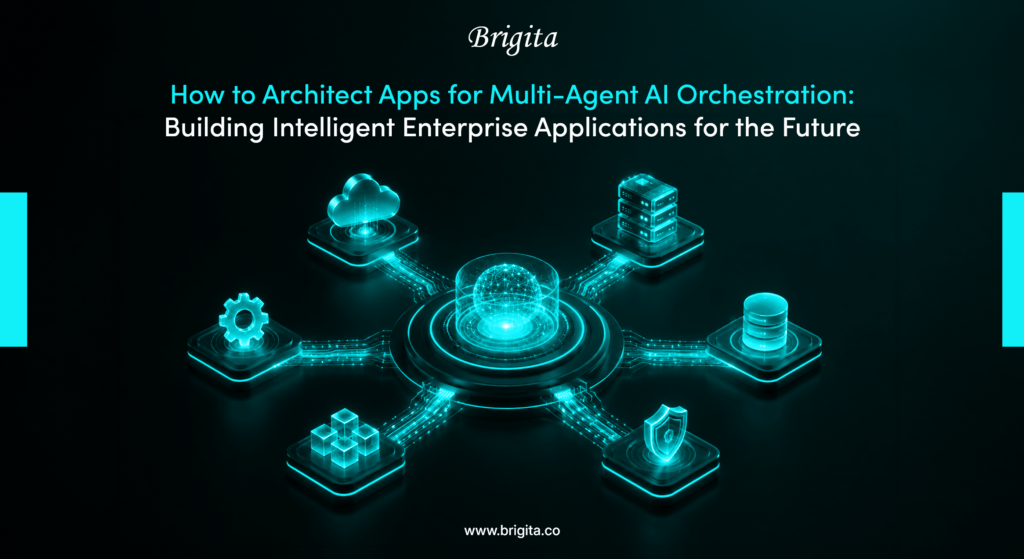
Multi-Agent AI Orchestration refers to an architecture where multiple AI agents work together within a coordinated environment to achieve a common goal. Rather than assigning every responsibility to a single AI model, tasks are distributed among specialized agents that communicate and collaborate throughout the process.
Each agent performs a unique function. One agent may gather information, another may analyze data, while another may execute actions or generate recommendations. Together, these agents create a highly efficient system capable of handling complex workflows.
This collaborative approach allows businesses to improve performance, increase scalability, and create more intelligent applications that can adapt to changing requirements.
As organizations continue their digital transformation journeys, Multi-Agent AI is becoming an increasingly important framework for building enterprise applications capable of supporting evolving business needs.
Why Businesses Are Adopting Multi-Agent AI Systems
Modern enterprises operate in highly dynamic environments where data flows through multiple systems, applications, and business units. Managing these interconnected processes requires more than traditional automation.
Multi-Agent AI systems provide several advantages:
Improved Scalability
Each AI agent can focus on a specific task, making it easier to scale applications as business demands increase.
Enhanced Operational Efficiency
Specialized agents can process information faster and more accurately, reducing manual effort and improving productivity.
Better Decision-Making
AI agents can analyze large volumes of data, identify patterns, and provide insights that support business decisions.
Greater Flexibility
Organizations can add, modify, or replace agents without redesigning the entire application architecture.
Increased Automation
Multi-Agent systems help automate repetitive and complex workflows, enabling teams to focus on higher-value activities.
These benefits make Multi-Agent AI a powerful solution for organizations seeking long-term innovation and operational excellence.
Core Components of a Multi-Agent AI Architecture
A successful Multi-Agent AI application relies on several foundational components.
Specialized AI Agents
Each agent is designed to perform a specific task.
Examples include:
Planning Agents
Research Agents
Data Processing Agents
Analytics Agents
Monitoring Agents
Customer Support Agents
Compliance Agents
By specializing in specific functions, agents can operate more efficiently and deliver better outcomes.
Orchestration Layer
The orchestration layer acts as the central coordinator of the system.
Its responsibilities include:
Managing communication between agents
Assigning tasks
Monitoring workflows
Handling exceptions
Optimizing resource allocation
Without orchestration, agents would operate independently and fail to collaborate effectively.
Knowledge and Data Layer
AI agents require access to reliable information.
The knowledge layer may include:
Enterprise databases
Document repositories
Data warehouses
Business intelligence platforms
Knowledge management systems
Providing agents with accurate information improves performance and decision-making capabilities.
Integration Framework
Enterprise applications often interact with multiple business systems.
Multi-Agent AI applications must integrate seamlessly with:
CRM platforms
ERP systems
HR software
Financial applications
Customer support platforms
Cloud services
Strong integration capabilities ensure smooth data flow across the organization.
Designing Scalable Applications for Multi-Agent AI
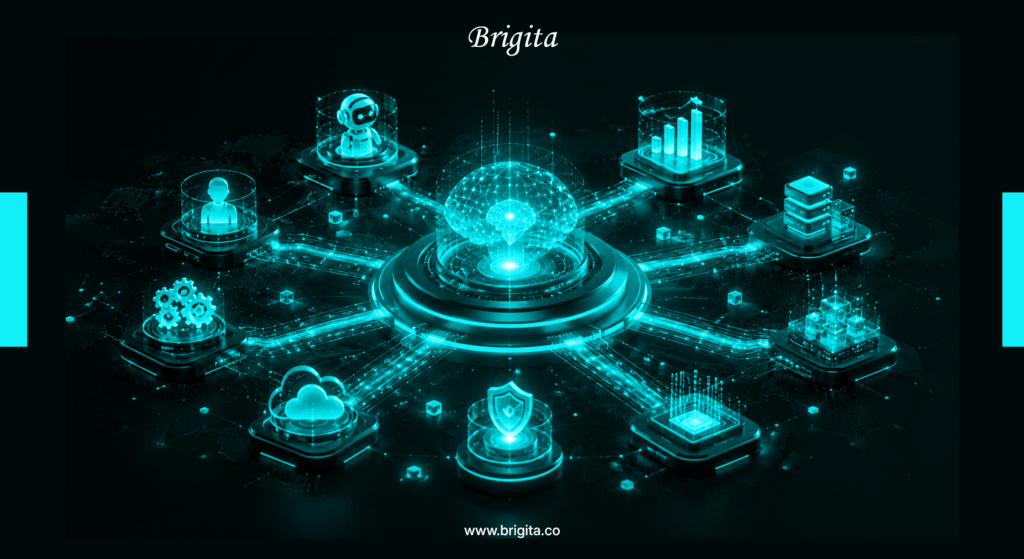
Scalability should be a key consideration when architecting intelligent applications.
Build Modular Components
Modular architecture allows organizations to develop and deploy agents independently.
Benefits include:
Faster updates
Easier maintenance
Greater flexibility
Reduced development complexity
A modular design also supports future expansion as business requirements evolve.
Define Clear Agent Responsibilities
Each agent should have a well-defined purpose.
Clearly defining responsibilities helps avoid:
Task duplication
Communication conflicts
Performance bottlenecks
Well-structured roles improve overall system efficiency.
Support Independent Scaling
Different agents may experience different workloads.
Applications should allow agents to scale independently based on demand.
This approach optimizes infrastructure costs while maintaining performance.
Leveraging Cloud Infrastructure for Multi-Agent Applications
Cloud platforms play a critical role in supporting modern AI architectures.
Cloud infrastructure provides:
Scalability
High availability
Security
Performance optimization
Cost efficiency
Organizations building Multi-Agent AI applications often leverage cloud-native technologies to support dynamic workloads.
Cloud environments allow businesses to deploy AI agents globally while maintaining reliability and flexibility.
At Brigita, our Cloud Engineering and Application Development teams help organizations build cloud-native solutions that support intelligent automation and digital transformation initiatives.
Data Engineering for Intelligent Applications
Data is the foundation of every AI-powered system.
Without reliable data, even the most advanced AI agents cannot perform effectively.
Unified Data Access
AI agents should have access to consistent and reliable information.
A centralized data strategy improves collaboration and reduces inconsistencies.
Real-Time Data Processing
Many business decisions require immediate access to information.
Real-time processing enables agents to respond quickly to changing conditions and support dynamic workflows.
Data Governance
Organizations must implement governance frameworks to ensure:
Data quality
Security
Compliance
Accuracy
Strong governance practices help maintain trust and reliability across AI systems.
Security and Governance Considerations
As organizations increase their use of AI, security and governance become increasingly important.
Protect Sensitive Information
Multi-Agent systems often access critical business data.
Organizations should implement:
Identity and Access Management
Role-Based Permissions
Data Encryption
Audit Logging
Compliance Monitoring
These measures help protect sensitive information and reduce risk.
Establish AI Governance Policies
Effective governance ensures AI systems operate responsibly.
Policies should address:
Agent responsibilities
Decision approval processes
Risk management
Performance monitoring
Regulatory compliance
Governance frameworks help organizations maintain transparency and accountability.
Real-World Applications of Multi-Agent AI
Multi-Agent AI can be applied across a wide range of industries and business functions.
Customer Service Automation
AI agents can collaborate to:
Retrieve customer information
Analyze support requests
Generate responses
Escalate complex issues
This improves response times and customer satisfaction.
Enterprise Knowledge Management
Organizations often store information across multiple systems.
AI agents can locate, summarize, and deliver relevant information to employees and decision-makers.
Workflow Automation
Multi-Agent systems can automate:
Employee onboarding
Invoice processing
Procurement workflows
Compliance reviews
Service management tasks
Automation improves efficiency and reduces manual effort.
Business Intelligence and Analytics
AI agents can collect data, identify trends, and generate actionable insights that support strategic decision-making.
This helps businesses respond more effectively to market opportunities and operational challenges.
Common Challenges in Multi-Agent AI Development
While Multi-Agent AI offers significant advantages, organizations should be aware of potential challenges.
Communication Complexity
As the number of agents increases, communication management becomes more challenging.
A strong orchestration framework is essential for maintaining coordination.
Data Consistency
Multiple agents accessing different systems may create inconsistencies.
Centralized data management helps address this issue.
Resource Utilization
AI workloads can consume significant computing resources.
Cloud-native infrastructure helps optimize resource allocation and scalability.
Governance and Compliance
Organizations must ensure AI systems operate within regulatory and organizational guidelines.
Regular monitoring and oversight help maintain compliance.
By addressing these challenges early, businesses can build more reliable and scalable AI applications.
Why Businesses Choose Brigita for Application Development
Brigita helps organizations build intelligent, scalable, and future-ready applications through its Application Development (ADEMS) services. Our expertise spans Custom Application Development, Enterprise Software Solutions, AI Engineering, Cloud Infrastructure, Data Engineering, Product Development, API Integrations, and Digital Transformation Services.
Based in Bangalore, Karnataka, India, we work closely with businesses to design innovative digital solutions that improve operational efficiency, support business growth, and accelerate technology adoption. Whether you are developing a cloud-native platform, modernizing legacy applications, or implementing Multi-Agent AI systems, Brigita provides end-to-end development and consulting support tailored to your business goals.
Our focus on innovation, scalability, and long-term value helps organizations transform ideas into impactful digital products and enterprise solutions.
Conclusion
Multi-Agent AI Orchestration is reshaping the future of enterprise application development. By enabling multiple intelligent agents to collaborate within a coordinated environment, businesses can automate complex workflows, improve decision-making, and create more scalable and adaptable software systems.
Organizations that invest in Multi-Agent architectures today will be better positioned to support future growth, accelerate innovation, and maintain a competitive advantage in an increasingly AI-driven world. From customer service automation and workflow optimization to enterprise intelligence and digital transformation, Multi-Agent AI offers significant opportunities for businesses across industries.
At Brigita, Bangalore, Karnataka, India, we help organizations leverage the power of Application Development (ADEMS), AI Engineering, Cloud Solutions, and Digital Transformation Services to build intelligent applications that deliver measurable business value. By combining modern architecture principles with advanced AI capabilities, we enable businesses to create future-ready solutions that drive efficiency, innovation, and sustainable growth.
Frequently Asked Questions
1. What is Multi-Agent AI Orchestration?
Multi-Agent AI Orchestration is a framework where multiple AI agents work together to perform different tasks within a business process. Each agent handles a specific function, improving automation, scalability, and decision-making. Brigita helps businesses build intelligent Multi-Agent AI applications through Application Development (ADEMS), AI Engineering, and Digital Transformation Services in Bangalore, Karnataka, India.
2. Why are businesses adopting Multi-Agent AI systems?
Businesses are adopting Multi-Agent AI systems to automate complex workflows, improve operational efficiency, and support faster decision-making. These systems enable organizations to scale AI capabilities across departments while reducing manual effort. Brigita develops customized AI-powered solutions that help businesses accelerate innovation and growth.
3. How does cloud infrastructure support Multi-Agent AI applications?
Cloud infrastructure provides the scalability, flexibility, and performance needed to run Multi-Agent AI applications efficiently. It allows organizations to manage AI workloads, process large amounts of data, and scale resources as needed. Brigita offers Cloud Engineering and Application Development services to help businesses build secure and scalable AI solutions.
4. What industries can benefit from Multi-Agent AI applications?
Multi-Agent AI applications can benefit industries such as healthcare, finance, retail, manufacturing, logistics, and technology. These systems help automate operations, improve customer experiences, and enhance business intelligence. Brigita helps organizations implement AI-driven solutions tailored to their industry requirements.
5. Why choose Brigita for Application Development and AI Solutions in Bangalore, Karnataka, India?
Brigita specializes in Application Development (ADEMS), AI Engineering, Cloud Solutions, Data Engineering, Product Development, and Digital Transformation Services. Based in Bangalore, Karnataka, India, Brigita helps businesses build scalable, secure, and future-ready applications that support innovation and long-term growth.
📍 Google Maps: https://maps.app.goo.gl/1vWJphhWMJNHs4t7A
Search
Categories
Reach Us
About The Author

Ramesh
Ramesh is a passionate Digital Marketing Specialist with over 4+ years of proven expertise in SEO, social media management, and ad campaign strategies. He has authored insightful blogs on SEO, digital growth, and campaign optimization, helping businesses and startups unlock their online potential. With deep knowledge in on-page and off-page SEO, Google My Business (GMB) optimization, and Google Ads, Ramesh delivers measurable results that boost brand visibility and drive growth. Driven by a commitment to excellence, he combines data-driven strategies with creativity to achieve impactful marketing outcomes. In his free time, Ramesh enjoys playing cricket and spending quality time with friends.